

Poems about mothers
‘Now all of us reminiscing about our mothers—/ as women who always...’

My mother passed away and I wrote about it—like Roland Barthes did, and like so many poets out there do. Because I could write about it, much about her death (and celebrating her life) became a part of my New Poets Prize-wining third poetry pamphlet Notes on Burials (smith|doorstop, 2025) and while I’ve always loved poems about mothers, there’s a greater probability now that I’ll pause and read one. And I am then taken by the beautiful lines. As an example of gesture as an approach to another person, Emily Freeman writes ‘I cannot say your mother’s name, so I bring carnations’ in a poem about talking to someone’s mother in a different language and looking at a difference in language as also an opportunity for an exchange of cultures. Seamus Heaney in one of his poems, named Ireland’s best-loved poem from the past century,1 and part of a longer sequence, talked about being ‘all hers’—his mother’s—as together they ‘peeled potatoes.’ There is a sense of agelessness and then of losing a mother that comes as much more than grief at (again) any age.
When I wrote ‘Our mothers’, I was writing with a friend after, not long ago, some of the boys in college (including myself) had gone up to the roof and sat down there, listening to songs and not doing much else. While writing another poem, I was reminded and very affected by ‘how during the pandemic/ we listened to each-other/ in the world’s desolate hush.’ I think it was my mother who taught me patience (it was her who was patient and dedicated enough to do that), because mothers themselves, they take up so little space and often disappear; there’s this Henry Treece poem ‘Ballad’ that I don’t much understand from a 1942 issue of Poetry London, but the couple of lines in it that present an image of a mother show her as patient and forever waiting for her child: ‘My mother is waiting, I’m certain sure’.2
Erin Belieu is so correct when she says ‘What glorious, enraging, most essential beings mothers are’, when she writes ‘Poems to/ mothers make us feel/ little again.’ Enraging, what a word to use here! Imagine, after all, as Kipling mentions, being ‘hanged on the highest hill’, and ‘whose love would follow [you] still’?—well, maybe don’t imagine, but you get the idea!
And perhaps the best of all, Agha Shahid Ali writes ‘My mother/ is my poem.’
                                                   I tell my mother to count
          her blessings, I could have worse coping mechanisms
          than taking my fictional Doberman for a walk.
                    — Imogen Wade, ‘Argos’
While working on the later drafts of Notes on Burials (and other poems since), I (have) realised what Ali meant by this. In her absence, he is ready to consider harsher measures: ‘let the universe,/ like Paradise, be considered a tomb’—that even ‘her breathing drowns out the universe/ as she sleeps’. And what better tribute, and mention of love, than this?
And years ago, Barthes, in his Mourning Diary, writes: ‘Many others still love me, but from now on my death would kill no one.’3 Of course, what mustn’t a mother be to lose herself so in her child’s loss, even a small one!
I am currently reading Days at the Morisaki Bookshop, and when I began with the book, I was also working on this post (I’ve been collecting poems to include here for over a month now), so when I read ‘my mother was behind this […] it had to be her […] because she was so worried about me’ I noticed again this image of a mother as disappearing, worried, and caring.4
Of course, creating an environment where you talk about mothers as a major figure in poems—or writing, in general—can get serious soon, or full of grief, given we are all full of loss, but the image of a mother is much more than that of mourning. Rachel Curzon imagines mother’s ‘every finger bright/ with light, or grace’, even in sickness.5 In another of her poems, Curzon recreates an image of Maud Gonne who as a mother ‘rests a palm/ on all the letters of her favourite name’—her son’s, on his grave. In these two poems, she has reimagined both the perspectives—a child’s, and a mother’s—in short, urgent pieces that are (in some capacity) a joy to read. A mother herself, despite all the sadness that might surround her in poems, is a figure of joy more than anything else. I remember it was my mother I could joke with without worrying for a scolding to come later; it was always her—even in winter—cooking for us.
Yet, I understand that poems about mothers are somehow always houses of grief, even with moments of calm comfort, perhaps because we’re always a bit behind (as children) in understanding what a mother is.
Imogen Wade’s ‘Argos’, a Montreal International Poetry Prize finalist in 2024, is not a long poem and is made up of generally short and, so, urgent lines. Lines (again) full of grief, and which fit into each-other like puzzle pieces and, much like the dog ever present in the poem, the poem itself is very much a coping mechanism—or at least describes the narrator’s approach to coping with loss. It takes a slight, bittersweet turn for me when mother is mentioned, that there are worse ways to go about grieving.
‘With fathers [of course], it’s different!’6
Cited poems:
Kashyap, Jayant (8 June 2025). Notes on Burials. The Poetry Business. ISBN 978-1-914914-95-9.
Freeman, Emily (4 January 2026). “Katarzyna”. The Vanity Papers (9). Accessed 7 January 2026.
Heaney, Seamus (8 June 2014). “Clearances”. Poetry Foundation. Accessed 10 January 2026.
Heaney, Seamus (13 March 2015). “When all the others were away at Mass”. FSG Work in Progress. Accessed 10 January 2026.
Kashyap, Jayant (7 May 2025). “Our mothers”. Cordite Poetry Review. Accessed 10 January 2026.
Kashyap, Jayant (25 November 2024). “Ways to not forget”. The Ex-Puritan. Accessed 10 January 2026.
Belieu, Erin (1 May 2014). “Another Poem for Mothers”. Academy of American Poets. Accessed 10 January 2026.
Kipling, Rudyard (7 May 2007). “Mother o’ Mine”. Academy of American Poets. Accessed 10 January 2026.
Ali, Agha Shahid (2 July 2014). “Lenox Hill”. Poetry Foundation. Accessed 10 January 2026.
Curzon, Rachel (4 September 2018). “Grass Like His Mother”. The Poetry Society. Accessed 15 January 2026.
Curzon, Rachel (10 July 2024). “Rite”. Ink Sweat & Tears. Accessed 15 January 2026.
Kashyap, Jayant (3 July 2022). “Winter Rain”. Anthropocene Poetry Journal. Accessed 15 January 2026.
Wade, Imogen (18 September 2024). “Argos”. Montreal International Poetry Prize. Accessed 10 January 2026.
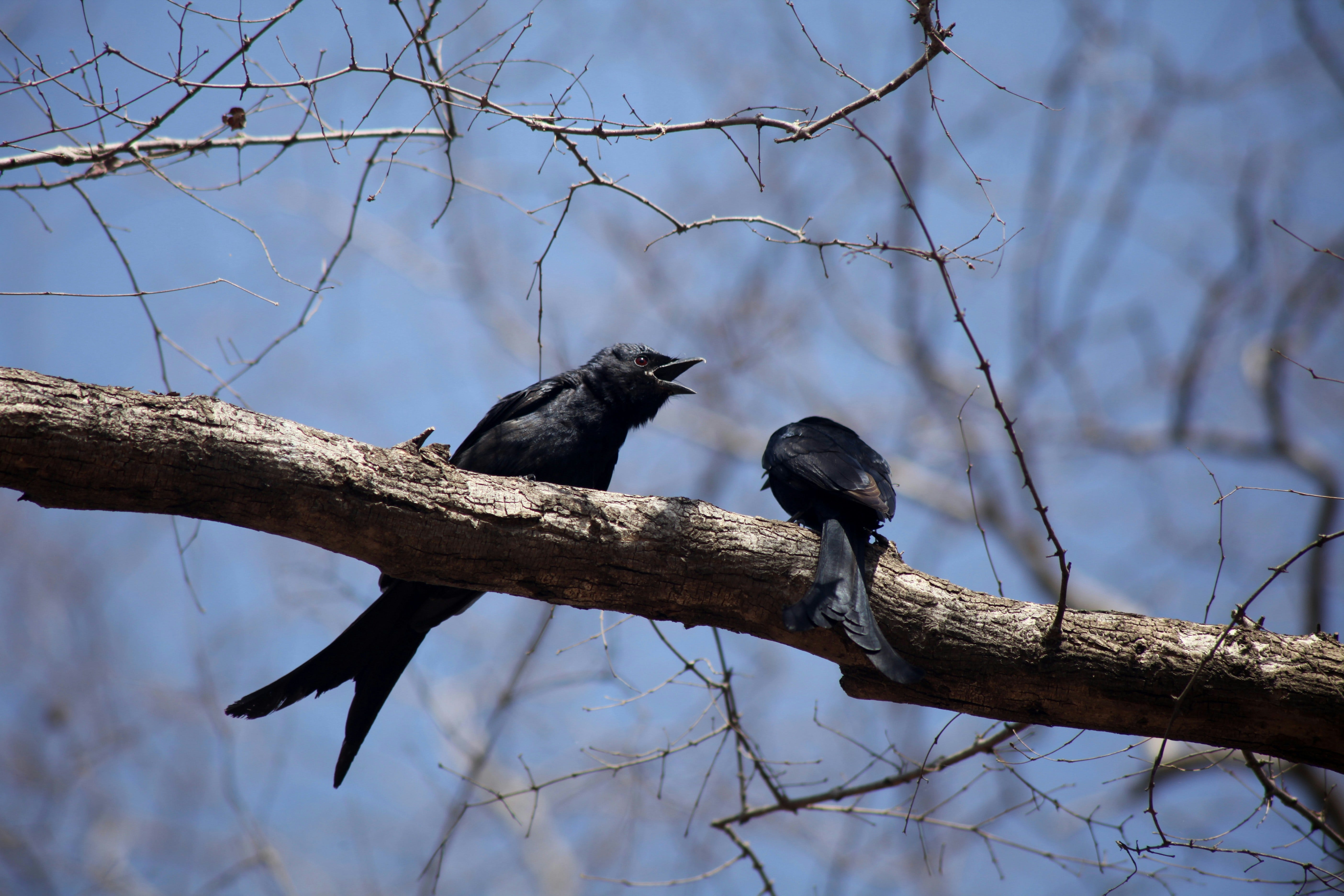
Photo by Adya Sharma on Unsplash.
Griffin, Dan (11 March 2015). “When All The Others Were Away at Mass tops favourite poem poll”. The Irish Times. ISSN 0791-5144. Accessed 13 January 2026.
Treece, Henry (1942). “Ballad”. Poetry London (2.7), pp. 42–43. Accessed 13 January 2026.
Barthes, Roland (2010). “1977: October 30”. Mourning Diary. Hill and Wang / Farrar, Straus and Giroux. ISBN: 978-0-8090-6233-1.
Yagisawa, Satoshi (2023). Days at the Morisaki Bookshop. Manilla Press / Bonnier Books, p. 6. ISBN: 978-1-78658-323-9.
This poem, “Grass Like His Mother”, inspired by Brahms’s Ein Deutsches Requiem, was a winner in the BBC Proms Poetry Competition 2018, judged by Ian McMillan, Helen Mort and Judith Palmer.
More recently, I’ve been compiling poems I’ve written about mothers. One of those (as yet unpublished) poems ends with “With fathers, it’s different!”
This is so beautiful, Jayant. Thank you for allowing space for my poem.
Thank you so, so much for including my lines in this really searching, moving post. Feeling very honoured.