

A Year of ‘Notes on Burials’
It was called ‘an unforgettable collection of poems.’

The 8th of June 2026 marks a year since the online launch reading for my third pamphlet Notes on Burials, which won the New Poets Prize (selected by Holly Hopkins in 2024) and was published by smith|doorstop, an imprint of The Poetry Business.
In the past year, I’ve been told more than a few nice things about the pamphlet. The amazing Miriam Nash wrote a blurb,1 the Yorkshire Times called it an ‘outstanding collection’,2 Atrium featured it earlier this year (Jan.–Feb. 2026); the poet Lisa Stice called it ‘quietly beautiful’; and the National Poetry Competition-winning poet Imogen Wade said it ‘far exceeded any expectations’ for her; The Madrid Review in a now-unavailable post placed it ‘alongside the work of Seamus Heaney and Anne Carson’, which was baffling, to be honest; it was called a ‘worthy and thought-provoking winner’ in the PBS Autumn (2025) Bulletin, the poet Rebecca McCutcheon, in her online magazine eche, noted it as a ‘collection that invites rereading’, and Rachel Curzon called it ‘a corker’ even before Notes on Burials was formally out and about. I have been told that the poems in the pamphlet enter the most tender, quiet places of the heart.
By the end of the first quarter of 2026, around ten dozen copies had been sold, which to be honest is not much, but smaller poetry publications do not always get such distinguished praise either – the poets with pamphlets and collections with smaller presses know this – and, so, seeing all the buzz for my small publication, I am full of gratitude today.
I’m also grateful because, in the past year, so many friends have written and asked me for a copy or two – and despite the fact that some of them have been terribly busy in what is called a ‘PhD schedule’, I’ve got responses that imply people make time for poetry, even today, even people of scientific and other non-literary backgrounds.
I was shortlisted for the Poetry Business New Poets Prize before – in 2021 for a manuscript titled ‘Heavy Air’, and in 2022 for ‘Ambergris’. Nothing happened in 2023, which in retrospect is okay, but I was sad then. I was getting older, and would soon be ineligible for entry, and most other chapbook/pamphlet prizes have hefty entry fees, not to mention that The Poetry Business had already been kind enough to allow me a fee waiver twice, which is not always possible. Although Magma, the Bridport Prize, The Adroit Journal, and Copper Canyon Press are some of the others that have fee waivers in place for their competitions/subs.
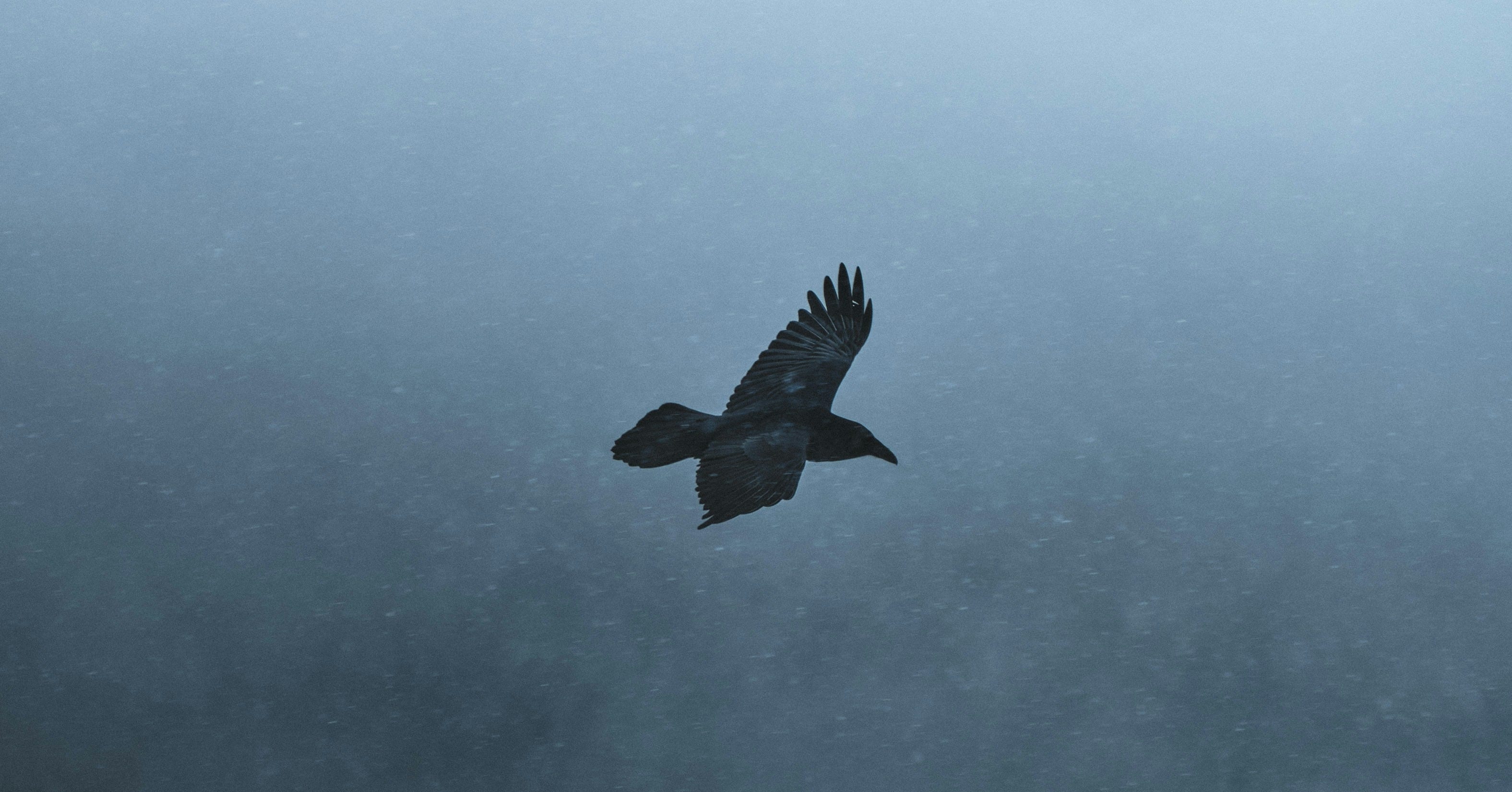
The first draft of Notes on Burials was prepared on the 29th of January in 2024, but the oldest poem is ‘Earth, Fire’, which won the Young Poets competition at the Wells Festival of Literature in 2021, selected by the poet Phoebe Stuckes. The poem was written after Yvonne Reddick’s ‘Translating Mountains from the Gaelic’.3 Overall, the idea was to have something substantial to send for consideration; and the idea behind the pamphlet was to look at death (or the passing of life) as a journey, and how we are so many things both before and after death. The draft began with poems written mostly in third person perspectives, and on the date of submission (14 Feb. 2024), there were 10 poems spread across 12 pages of a .docx file, which I hadn’t done before. Earlier, one of my drafts (Heavy Air) had 13 poems across 12 pages despite the fact that one of the poems took 3 pages alone, and the other (Ambergris) had 16 poems across the same amount of pages.
About four months later, I was informed on the 6th of June that I was one of the winners. ‘Earth, Fire’ wasn’t, however, a part of the draft that was submitted to the competition; nor was the ‘episodic’ ‘London, Upon Your Arrival’, which Steve Whitaker (for the Yorkshire Times) put in parallel with ‘a psycho-geographical dreamscape conjured by Peter Ackroyd’.
Five days after I learnt I had won, on the 11th, my mother passed away. It didn’t feel right, perhaps also because I wanted to sign a copy for her. The tone of the later poems, however, changed, and I got back to re-reading bits and pieces of Agha Shahid Ali’s poetry. While the first three poems – ‘dig (n.)’, ‘Dogs don’t want their puppies buried’, and ‘Notes on Burials’ – were written for the pamphlet right before submission, ‘On the finding of a body, said to be the result of a drug overdose’ was a retelling of a local incident which didn’t make news (not notably enough), and ‘White’ was borrowed from a notable news event,45 and each of these poems were more indirect in tone. However, that changed after the passing of my mother, following which I wrote several pieces in first person, moved to write each as a direct result of my experience of the event. Later, I included these poems in a longer draft before Holly guided me in editing the manuscript to make it publication-ready. ‘London, Upon Your Arrival’, a poem about an imagined London and inspired by (or imitating) Agha Shahid Ali’s ‘The Blesséd Word: A Prologue’ from The Country Without a Post Office (Norton, 1998), was one of those poems. ‘Incarnation’, published later in Poetry Northwest, and ‘Prayer for My Mother as a Child’, inspired by Miriam’s poem with a similar title,6 were also two of the later poems. ‘Dream Sequence’, not written after, was part of the set of poems awarded a Toto Award for Creative Writing in English, judged by Janice Pariat, Anil Menon, and Deepika Arwind.
On finalising the draft not many months ago (I think it was in February or March of 2025 that I sent a final draft), I noticed I was now left with a small collection that carried both the impersonal and the personal – in many ways intertwined with each other. So, it feels right when a review says that the poems in Notes on Burials ‘treat language as a living site where love, history, and absence meet.’
Poems and reviews cited:
McCutcheon, Rebecca (18 August 2025). “Notes on Burials”. eche. Retrieved 5 September 2025.
Reddick, Yvonne (23 February 2018). “Translating Mountains from the Gaelic”. yvonnereddick.org. Accessed 15 January 2026.
Nash, Miriam (19 April 2018). “Prayer for My Father as a Child”. Scottish Poetry Library. Accessed 19 June 2024.
Schneider, Jennifer (14 January 2026). “Review of Notes on Burials by Jayant Kashyap”. Mad Poets Society. Retrieved 15 January 2026.
Photo by spencer vandermeer on Unsplash.
On the back cover: “In these tender poems, definitions, etymologies and repetitions perform a kind of excavation, digging to the root-places but also layering back up, hand over hand, word over word, to build a language of grief that feels fractured and true.” — Miriam Nash
Whitaker, Steve (13 December 2025). “Earth, Fire: Notes On Burials By Jayant Kashyap”. The Yorkshire Times. Accessed 13 December 2025.
I read “Translating Mountains from the Gaelic” first on Yvonne’s website here, but there’s a longer version from 10 March 2017 on the Seren Books blog here.
Johnson, Eric (3 May 2023). “‘He saved my life’: Snowboarder rescued by skier on Mt. Baker now lifelong friends”. Komo News. Accessed 21 September 2023.
Kelly, Alana (4 April 2023). “Heart-pounding video shows snowboarder rescued by stranger”. Vancouver Is Awesome. Lodestar Media. Accessed 21 September 2023.
Miriam’s poem from her 2017 Bloodaxe debut All the Prayers in the House is called “Prayer for My Father as a Child”, which I first read on the Scottish Poetry Library’s website early in 2018.