

11 Essential Poems
Poems that have undoubtedly shaped my work

There are so many great poems in this world that to settle on a single favourite forever is nothing short of impossible, but there are always poems that shape your own work. Mine has been shaped by a number of poems through the years. I have been publishing since 2017, writing since 2012 (perhaps!), and off the top of my head, I can always think of these poems as pillars for me, inspiring my work and all that!
Most of these I was introduced to what one would call ages ago—before or around the time I began publishing, that is. Some, however, are fairly new to me and stuck because of the impact the poems have had. I am very grateful to each of these poets.
Shara Lessley’s ‘Wintering’. Published in the Fall 2004 issue of Blackbird, I was so taken by how the poem ends that I borrowed it for use in a number of my own drafts. It talks about transformation and is in ways an understanding of the act of letting go—acceptance, therefore. A decade ago, I wasn’t smart enough to understand any of it, so my poems, ‘Ageing’ in New Ink Review and ‘Pompeii’ in The Magnolia Review, have the phrase/sentence ‘Let it’ from the poem. Moving forward, however, I’ve understood loss better and now the theme of the poem is more visible than the phrase in my own work.
A short note: Poetry publication can be tough with little to zero remuneration/support, or maybe call it a lacking compensation for the hard work and all the time drafts after drafts take (almost like growing older after every poem). In the beginning, finding the right journals to send poems out to was difficult, but I learnt that I loved the community. I was supported (and cautioned) by some of the best poets out there about how things work, and some of them sent me their collections from miles and miles away. While I certainly do love the signed copies, which include two of Shara’s, I’m still here for the beautiful community that it is.
Agha Shahid Ali’s ‘Tonight’. This was one of the first poems I was introduced to on my path to earnest poetry publishing. It was 2016, if I remember correctly, a friend and I were sitting at the back in what was perhaps a Physics class (heat and thermodynamics?) and he said to me, and I still agree, that ‘Tonight’ is one of the best poems written in English. A poem that also further popularised the ghazal form in the English language. In an essay from 2010, Stephanie Burt hailed this ‘poem about lost love and loneliness’ as one that comes close to becoming an ‘instant classic’.1 For me though, it became an instant classic the moment I listened to my friend read it and explain it to me—to understand a Kashmiri poet from a reader from Kashmir felt like a privilege, which it indeed was. Soon after, I read Ali’s collected poems, and here I am!
Lauren Hilger’s ‘Exaptation’. I didn’t know the meaning of this word until I first read the poem on the Poetry Foundation website. Given my bioscience background, I should’ve known it. Funnily enough, I do still sometimes forget what it means (I’ve just rechecked the dictionary!), but perhaps for this very reason, I’m very much taken by this poem. This poem, about one of those controversial barbies (I think!), has that hint of understanding change, like in Shara’s ‘Wintering’ but in a different capacity, or manner. As it is, I’m all for understanding change from different angles, different perspectives.
Michael Longley’s ‘The Ice-Cream Man’. There have always been poems that have established certain poets as important figures of their era. Longley’s poem, in its vital simplicity, defining repetition, and understanding of grief, did that! On podcasts, he often talked about how this poem was perhaps one of his most important—not only, I believe, because how good the poem itself is, but because how things turned out after its publication.2 If things go alright, my version of ‘The Ice-Cream Man’ will also be published someday. Fingers crossed!
Another of his poems that I’m particularly taken with is really short:
          ‘The Design’

           Sometimes the quilts were white for weddings, the design
           Made up of stitches and the shadows cast by stitches.
           And the quilts for funerals? How do you sew the night?

                      — Michael Longley
Marie Howe’s ‘What the Living Do’. So many poems are as good as they are because of how they end, because of how the ending stays with the reader. This doesn’t mean one has to force a poem to end on a heroic stance. Howe’s poem, for example, ends with a quiet ‘I am living. I remember you.’ After all, this is what the living do—live to remember those that are no longer alive.
Howe’s collection of the same name is a brilliant example of how language simplistically presented is the best form of language. I read it for the first time earlier this year, and the poems have a sense of mystery that can only be successfully presented by someone who recognises the nooks and crannies of a language, and yet nowhere does the collection lack substance or expression. In an interview, Howe said that the collection is a celebration of life, which you realise as a reader when you see how some of the characters cling to each-other—for love, and then for hope.
Seamus Heaney’s ‘When all the others were away at mass’. I didn’t fall head over heels in love with Heaney’s work from the start. Perhaps because I didn’t always understand the rural Irish landscape in his poetry but, over time, I have understood things better, including his poems, and one of the few poems that I keep going back to is this one. I wrote about it in a previous post—as having a sense of agelessness and then of losing a mother that comes as much more than grief at any age—but, ignore my words, this is also Ireland’s best-loved poem from the past century.3 Reading this poem, I find a not-very-explainable form of comfort in its lines looking at the quiet closeness between a mother and her son, and then a form of grief at the realisation of loss. Mothers, as it is, are irreplaceable, and by the end of the poem, this feeling of not having this person close anymore is (not noisily but) loudly painful, to say the least.
Penny Boxall’s ‘Conservation Status’. As a bioscience guy with particular interest in ecology and conservation, Boxall’s poem has constantly stayed on my mind for the past three or four years. As a list poem, it looks like a humorous piece at first glance. Essentially, it’s a short poem that presents our path towards extinction as a process—beginning with the presence of trees as something one can take for granted, as we do already, and moving towards the idea of the existence of even a tree being questionable—and, therefore, serves as a warning. I haven’t been in circles that have frequently praised this poem, and I understand that, given it is perhaps not very visually striking, nor is it very musical, but Boxall’s ‘Conservation Status’ is smart, to say the least, and has inspired, even subconsciously, the themes and the approach of a number of my poems.
Yvonne Reddick’s ‘Translating Mountains from the Gaelic’.4 A couple years ago, I compiled a draft manuscript about grief, which in some capacity began when I worked on another poem in 2021 after Yvonne’s. I discovered that her poem is a masterclass on writing loss and grief, since it appears earnestly as a number of things, including a listicle, a place poem, a poem with an approach to etymology (almost) or naming, and a poem about the passing of a father, so a tribute or an elegy. The 2021 poem5 then became a part of the draft I worked on in 2024, which went on to win the year’s New Poets Prize—Notes on Burials.
Reading a recent interview, I’ve learnt that Yvonne thinks Notes on Burials is ‘wonderful’. As I said earlier, I am definitely here for the community!
Zaffar Kunial’s ‘Scarborough’. While poems are a thing of their own and go mostly with individual identities, it is still fun to listen to a poet recite their own work. I’ve repeatedly hung my ears on podcasts featuring readings by the likes of Longley and Heaney, but I got the opportunity to listen to Zaffar talk about this poem during an Out-Spoken Academy session in 2023. And much as you might love a beautiful poem already, listening to the poet read it stays with you! ‘Scarborough’ is a place and history poem with a focus on naming in a way that questions things. The poem is an image of the place (city/town?) in words and focusses on ‘[t]he rhythm of memory’, like Yvonne’s poem does, and serves in itself as a map of a larger place.
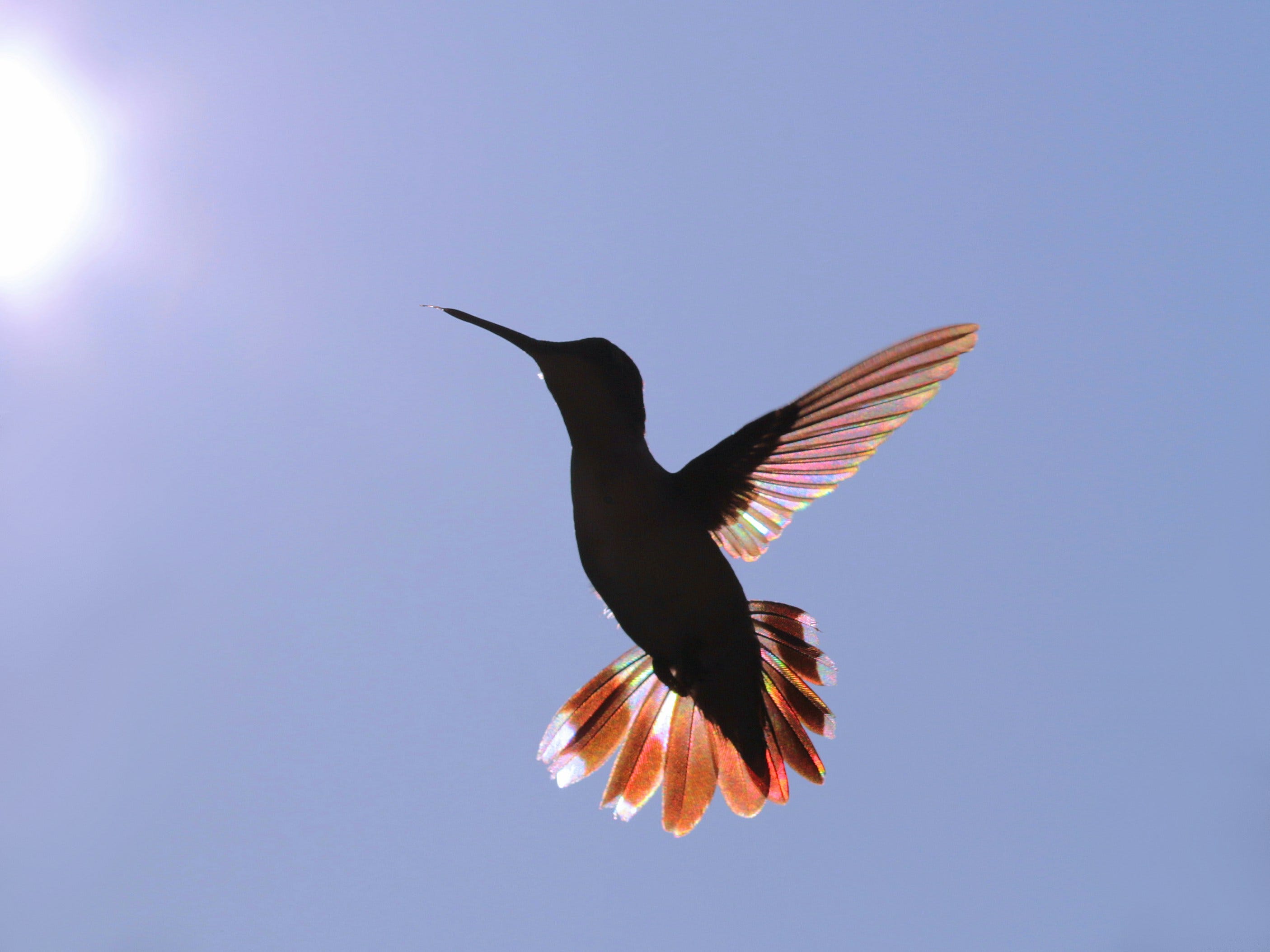
Sylvia Legris’s ‘Hummingbird’ triptych. Out-Spoken Academy proved to be very important in many ways—also for my first appearance in Poetry London. Rachael Allen’s class looking at Legris’s poem inspired me to work on something similar, and I wrote ‘Oak’, which first appeared in Poetry London in 2024, and later in Notes on Burials. With ‘Hummingbird’, what jumped out of the page for me was how the phrases are short descriptions of how and/or what a hummingbird essentially is. With ‘Oak’, my approach was perhaps similar, although maybe a little less scientific in terms of text, but not very different from how all the flowers in Longley’s ice-cream man poem point to a single grief. Nor very different from how Shara’s poem advises acceptance: ‘Let it.’
Poems cited:
Lessley, Shara (2004). “Wintering”. Blackbird (3.2). Accessed 2 February 2026.
Kashyap, Jayant (11 August 2018). “Ageing”. New Ink Review. Accessed 7 February 2026.
Kashyap, Jayant (16 January 2019). “Pompeii”. The Magnolia Review (5.1), p. 38. Accessed 7 February 2026.
Ali, Agha Shahid (13 June 2013). “Tonight”. Poetry Foundation. Accessed 2 February 2026.
Hilger, Lauren (25 July 2023). “Exaptation”. Poetry Foundation. Accessed 2 February 2026.
Longley, Michael (29 October 2006). “The Ice-Cream Man”. The Guardian. ISSN 1756-3224. Accessed 2 February 2026.
“Michael Longley: The Vitality of Ordinary Things”. 3 November 2016. On Being with Krista Tippett. Accessed 7 February 2026.
Longley, Michael (1995). “The Design”. Poetry (167.1/2), p. 65. Accessed 2 February 2026.
Howe, Marie (2 April 2010). “What the Living Do”. Academy of American Poets. Accessed 2 February 2026.
Heaney, Seamus (13 March 2015). “When all the others were away at Mass”. FSG Work in Progress. Accessed 10 January 2026.
Boxall, Penny (15 July 2020). “Conservation Status”. Poetry (216.4), p. 343. Accessed 2 February 2026.
Reddick, Yvonne (23 February 2018). “Translating Mountains from the Gaelic”. yvonnereddick.org. Accessed 15 January 2026.
Kashyap, Jayant (30 November 2021). “Earth, Fire”. Wells Festival of Literature. Accessed 7 February 2026.
Kashyap, Jayant (2025). Notes on Burials. ISBN 9781914914959. Sheffield: The Poetry Business.
Reddick, Yvonne (22 January 2026). “The Burn”. Strange Pilgrims. Accessed 7 February 2026.
Kunial, Zaffar (30 June 2021). “Scarborough”. Centre for Place Writing: Place 2020–2021. Department of English, Manchester Metropolitan University. Accessed 2 February 2026.
Legris, Sylvia (2 August 2016). “Hummingbird”. Prac Crit. Accessed 2 February 2026.
Kashyap, Jayant (31 October 2024). “Oak”. Poetry London (109). Accessed 7 February 2026.
Photo by Ramona Edwards on Unsplash.
Burt, Stephanie: “There are no instant classics, but Agha Shahid Ali’s ghazal “Tonight” comes close”. The essay, titled “Agha Shahid Ali: “Tonight”: A contemporary take on an ancient Arabic form.” was originally published on 4 October 2010.
Michael Longley talks at length about his work in this episode of the On Being podcast, including about the ice-cream man who was “murdered on the Lisburn Road.”
Griffin, Dan (11 March 2015). “When All The Others Were Away at Mass tops favourite poem poll”. The Irish Times. ISSN 0791-5144. Accessed 13 January 2026.
Five or so years after first having read this poem, I’ve found that “Translating Mountains from the Gaelic” is available in two versions online—Yvonne’s site has a shorter one here, and there’s a longer version from 10 March 2017 on the Seren Books blog here.
This poem, written in 2021 after Yvonne’s “Translating Mountains from the Gaelic”, is called “Earth, Fire” and was selected by Phoebe Stuckes as the winner of the Young Poets competition at the Wells Festival of Literature.
Really appreciate this post. Probably one I’ll come to for reference. Thank you.🙏🏼